الاثنين، 21 فبراير 2022

Fayoum trips | Kom Oshim, Fayoum Attractions Karanis Museum

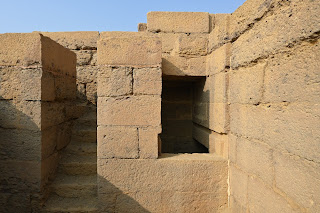
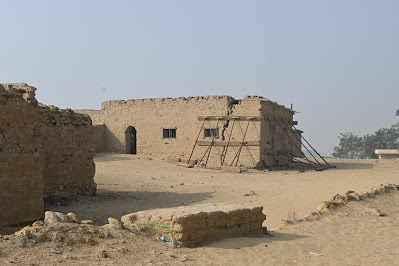
Kom Oshim is a town date back to Greek Roman in Fayoum at western desert of Egypt, this city went through many changes and it was totally occupied for about seven centuries, Today the remains of the city include two temples dedicated to the crocodile gods and a Roman bath, it also includes a museum that has an interesting display of glassware, jewelry and pottery discovered in the site.


Fayoum trips | Kom Oshim, Fayoum Attractions Karanis Museum


Karanis Museum:

Amuse yourself while explore Karanis Museum which is small but shows the design of the Ptolemaic Roman Empire, it also includes two of the famous Fayoum portraits which were painted on wood to cover the face of the mummy, The museum has antiques belong to Fayoum's different subsequent eras and it is really worth the visit.

The Museum is Good Place to pick guides to all parts of Fayoum. The Museum was originally erected in 1974. It Exhibits artifacts dating from Prehistoric to Roman Periods it Also Exhibits Fayoum Portrait

It consists of two floors and exhibits collections from the Prehistoric era to the Greco-Roman era as well as a collection from the Coptic and the Islamic era. The masterpiece of the museum is a Fayoum Mummy Portrait of a man. Labels are in Arabic and English.


Northern Temple:

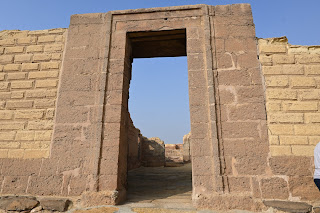
Scout around the most fascinating finds of this temple which date back to 1st Century, the temple has two small entrance pylons, and it has no inscriptions at all and dedicated to Roman Bath.


Fayoum trips | Kom Oshim, Fayoum Attractions Karanis Museum

Fayoum trips | Kom Oshim, Fayoum Attractions Karanis Museum

Fayoum trips | Kom Oshim, Fayoum Attractions Karanis Museum

Fayoum trips | Kom Oshim, Fayoum Attractions Karanis Museum

Fayoum trips | Kom Oshim, Fayoum Attractions Karanis Museum

Fayoum trips | Kom Oshim, Fayoum Attractions Karanis Museum

Fayoum trips | Kom Oshim, Fayoum Attractions Karanis Museum

Fayoum trips | Kom Oshim, Fayoum Attractions Karanis Museum


Fayoum trips | Kom Oshim, Fayoum Attractions Karanis Museum


Southern Temple:

Keen to visit the Southern Temple which was dedicated to god Sobek, feast your eyes with many mummified crocodiles have been found at Karanis and hidden chamber which was probably used by the priests to deliver oracles.


Book your visit to Kom Oshim 

karen Tours 01001918549


السبت، 19 فبراير 2022

Fayoum Heart-shaped Oasis

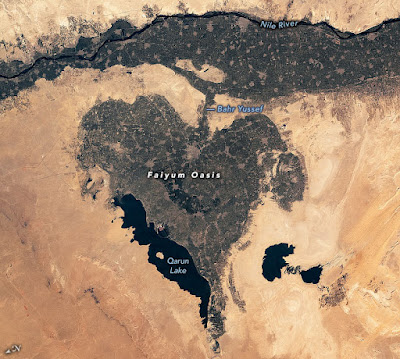
While in orbit over Egypt, an astronaut on the International Space Station (ISS) captured a photograph of this heart-shaped basin bordering the Nile River and the Western Desert. The depression, known as the Faiyum Oasis, spreads across more than 1,200 square kilometers (450 square miles) and was formed from the ancient lakebed of Lake Moeris.

Fayoum Heart-shaped Oasis


Partial damming of Lake Moeris during the reign of Ptolemy II allowed large areas of fertile alluvial soil to be reclaimed for agriculture. Today saltwater Lake Qarun (Birket Qarun), located on the northern margin of the depression, is the remnant of Moeris. The salinity of Lake Qarun is caused by high evaporation rates in the arid climate.

Farms and orchards fill the depression and line the western banks of the Nile. The numerous small gray patches are villages and towns in the intensively cultivated agricultural areas. The area has supported human life for more than 8,000 years and provides resources to many bird and fish species, as well as the endangered slender horned gazelle.

Bahr Yussef, which connects the Nile to the Faiyum Oasis, originally formed as a natural offshoot of the river. In 2300 BC, it was widened and deepened into a canal to help regulate flow to the oasis. The canal transports freshwater and sediment to the area before emptying into Lake Qarun.

Astronaut photograph ISS065-E-66742 was acquired on May 25, 2021, with a Nikon D5 digital camera using a focal length of 100 millimeters. It is provided by the ISS Crew Earth Observations Facility and the Earth Science and Remote Sensing Unit, Johnson Space Center. The image was taken by a member of the Expedition 65 crew. The image has been cropped and enhanced to improve contrast, and lens artifacts have been removed. The International Space Station Program supports the laboratory as part of the ISS National Lab to help astronauts take pictures of Earth that will be of the greatest value to scientists and the public, and to make those images freely available on the Internet. Additional images taken by astronauts and cosmonauts can be viewed at the NASA/JSC Gateway to Astronaut Photography of Earth. Caption by Sara Schmidt, GeoControl Systems, JETS Contract at NASA-JSC.